

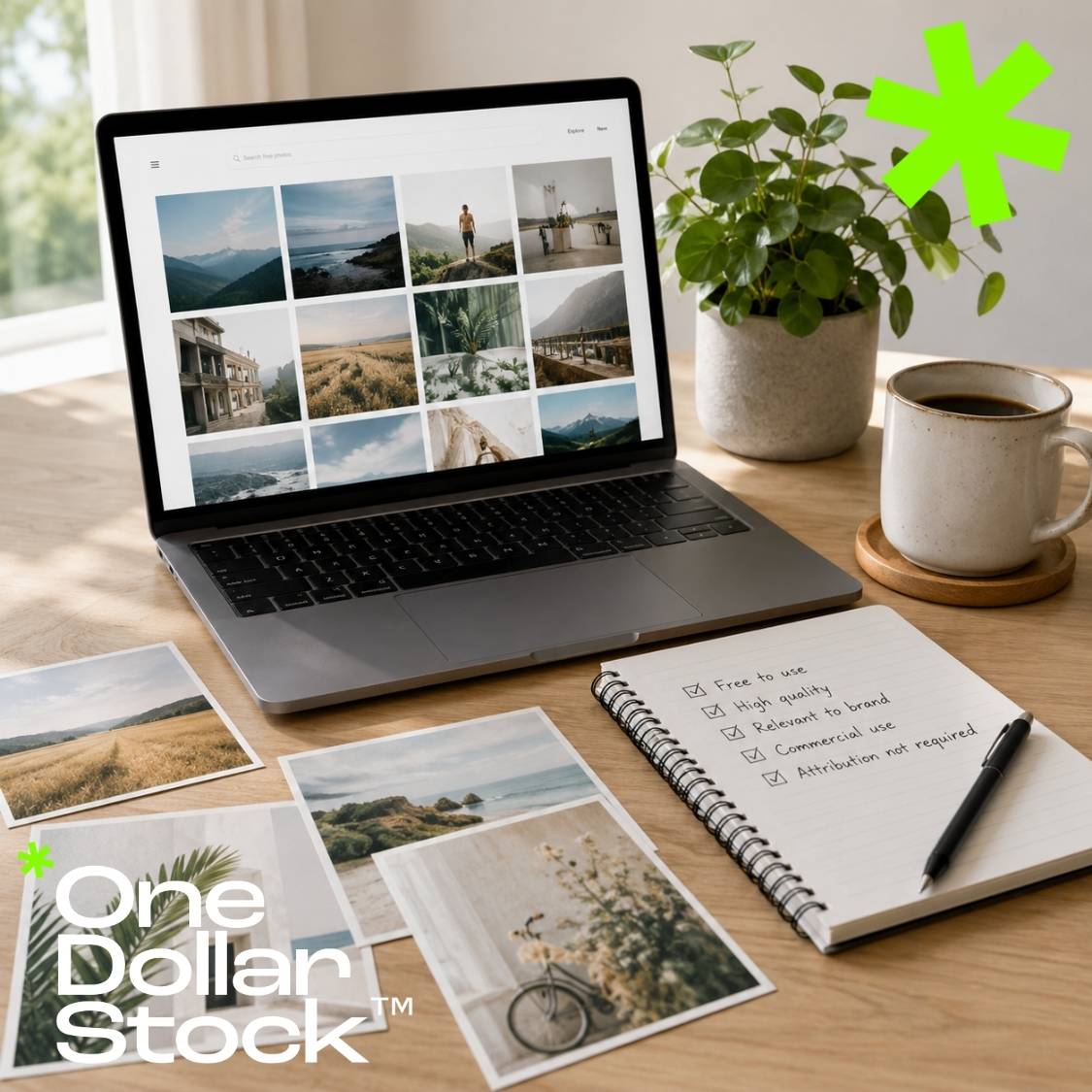
Free Stock Photos for Commercial Use: What to Check Before You Download
Free stock photos can be useful, especially when you are building a quick landing page, testing an idea, creating social media posts, preparing a presentation, or working with a small budget. The problem is that “free” does not always mean simple, safe, or suitable for commercial use. If you want to use free stock photos for a business website, ad campaign, client project, ecommerce store, newsletter, product mockup, or social media content, you need to check more than image quality. You also need to understand licensing, model rights, brand safety, file quality, originality, and whether the image can actually support the project you are building. This guide explains what to check before you download free stock photos for commercial use, when free images are enough, when paid assets are safer, and how to avoid the most common mistakes that make visual content look generic or risky. In this article: What commercial use means Free stock photo checklist Common risks with free stock photos When free images are enough When paid assets are better How to choose better commercial visuals What commercial use means Commercial use usually means using an image in a context connected to business, promotion, sales, advertising, monetization, client work, or brand communication. This can include a website hero image, paid social ad, product page, email campaign, pitch deck, digital download, printed flyer, YouTube thumbnail, or post for a company profile. The important point is that commercial use is broader than direct resale. You do not need to sell the image itself for your usage to be commercial. If the image supports a business goal, promotes a product, attracts customers, builds brand identity, or appears in client work, you should treat it as commercial usage and check the license carefully. A free stock photo can be free to download and still have limits. Always check whether the license allows commercial use, whether attribution is required, whether people or private property appear in the image, and whether the image can be used in advertising, templates, products, or client projects. Free stock photo checklist before you download Before using a free stock photo in a commercial project, go through a simple checklist. This protects your brand, saves time later, and helps you choose visuals that look intentional rather than randomly downloaded. What to check Why it matters What to look for Commercial use permission The image may be free but not suitable for every business context. A clear license that allows business, marketing, website, social media, or client use. Attribution rules Some free images require credit, which may not fit ads, landing pages, or product visuals. Check whether attribution is optional, required, or restricted by placement. People and likeness rights A person appearing in an image may involve model release or publicity rights. Look for clear usage information when people are recognizable. Logos and trademarks Visible brands can create legal or brand-safety issues. Avoid images with visible logos, labels, trademarked packaging, or branded products. Private property Buildings, interiors, artworks, vehicles, and designed objects may have usage restrictions. Use extra caution with famous landmarks, museums, galleries, hotels, and private interiors. Image quality Low-resolution or compressed images can make a brand look cheap. Choose high-resolution files with clean detail, natural color, and enough cropping flexibility. Visual originality Overused free images can appear across many unrelated websites. Search for images that feel specific, modern, and less obviously stock-like. Common risks with free stock photos 1. The image is legally free, but not risk-free Free licenses are often generous, but they do not automatically solve every commercial-use problem. An image may be offered for free by the platform, but that does not always mean every person, object, location, artwork, trademark, or property inside the image is cleared for every possible use. This matters most in advertising, paid campaigns, ecommerce, product packaging, client work, and anything that creates a direct connection between the image and a brand. If a recognizable person appears to endorse a product, or if a private property becomes part of a commercial campaign, the risk profile changes. 2. The image has been used everywhere One of the biggest practical problems with free stock photos is repetition. The same image can appear on dozens or hundreds of websites, blog posts, ads, presentations, and social profiles. Even if the license is fine, the visual may make your brand feel generic. This is especially damaging for startups, agencies, ecommerce brands, coaches, SaaS products, and creative businesses. If your hero image looks like something users have already seen on five other websites, the page can lose credibility before the copy has a chance to work. 3. The style does not match the brand Free stock libraries often push users toward whatever is easiest to find. The image may be technically good, but it may not match the brand’s tone, audience, colors, product category, or level of professionalism. For example, a financial services website needs a very different visual tone from a lifestyle brand, a children’s product, a design studio, or a fitness app. If the image style is wrong, the page can feel disconnected even if the photo itself is attractive. 4. The photo is hard to adapt A strong commercial image should be flexible. You may need to crop it for a website hero, social post, email banner, ad creative, thumbnail, presentation slide, or product mockup. Many free images look good in their original ratio but fall apart when cropped. Look for images with negative space, clean backgrounds, strong subject separation, and enough resolution to support multiple formats. If an image only works in one exact crop, it may slow down your workflow. 5. The visual lowers perceived value Commercial visuals influence how people judge a product, service, or brand. A weak image can make a premium offer feel cheaper. A generic image can make a serious company feel less credible. A low-quality image can make a polished page feel unfinished. This does not mean every brand needs expensive photography. It means every image should support the message. Good stock assets save time because they look intentional from the start. When free stock photos are enough Free stock photos can work well when the visual is not the main driver of conversion, the project is low-risk, or you are still testing an idea. They are useful for drafts, internal presentations, early mockups, moodboards, simple blog posts, and quick social content. Free images are also useful when you need generic visual support rather than a distinctive brand asset. For example, a simple background texture, abstract image, nature photo, or placeholder visual can be enough for an early version of a page. Good use cases for free stock photos Early landing page drafts Internal moodboards and concept boards Blog posts with low commercial risk Simple social media posts Presentation backgrounds Non-branded design experiments Testing visual direction before buying premium assets If you are looking for accessible assets to start with, browse the free collection on OneDollarStock. It includes free creative assets that can help you test styles, build quick concepts, and explore different visual directions before scaling a campaign or brand system. Start with free creative assets Explore free images, graphics, and visual resources on OneDollarStock. Use them to test ideas, build moodboards, create quick concepts, and start projects without adding visual cost at the beginning. Browse free assets → View licenses → When paid assets are better Paid assets are usually a better choice when the image is part of a real business outcome. If the visual appears on a paid ad, homepage, pricing page, ecommerce product page, lead magnet, client website, commercial presentation, print material, or template you deliver to someone else, the image should be chosen more carefully. Paid assets are not only about resolution. They are about confidence, consistency, better curation, clearer commercial use cases, and a more professional result. For many teams, paying for a stronger asset is cheaper than wasting hours trying to make a weak free image work. Paid assets make more sense when: The visual appears in a paid campaign The image is used for a client project The asset supports a product, offer, or landing page The brand needs a more premium look You need visual consistency across many materials You want to avoid overused images You need assets beyond simple photos, such as mockups, presets, LUTs, textures, overlays, or templates For brand, marketing, ecommerce, and creator workflows, the best option is often not a single photo. It is a full creative asset system: images, graphics, mockups, textures, presets, LUTs, overlays, and templates that work together across campaigns. OneDollarStock is built around that broader workflow. Instead of only downloading one image, you can build a more complete visual system for websites, ads, social media, product pages, presentations, and creative projects. How to choose better commercial visuals Choose images with a clear job Before downloading any image, decide what the image needs to do. Is it supposed to build trust, explain a product, create emotion, support a blog post, make an ad more clickable, or make a landing page feel more premium? A visual without a job is decoration. A visual with a clear job becomes part of the message. Look for useful negative space Negative space is one of the most useful traits in commercial visuals. It gives you room for headlines, buttons, product mockups, overlays, and mobile cropping. Images with clean space are easier to adapt across ads, banners, slides, thumbnails, and web sections. Avoid obvious stock-photo behavior Overly staged smiles, unrealistic office scenes, generic handshakes, fake-looking teamwork, and exaggerated expressions can make a brand look less credible. Modern commercial visuals usually work better when they feel natural, specific, editorial, or product-focused. Check whether the image fits your audience A good commercial image should feel relevant to the person you want to reach. A founder, designer, ecommerce manager, parent, fitness customer, creative director, or SaaS buyer will respond to different visual cues. The more closely the image matches the audience and use case, the better it performs. Think beyond the first placement If you are choosing an image for a serious project, ask whether it can be reused across related materials. Can it support the landing page, social posts, email header, presentation, and ad creative? A versatile image saves time because it can become part of a small visual system. Free vs paid stock photos: practical comparison Free and paid stock photos are not enemies. They solve different problems. Free images are good for speed, testing, and low-risk projects. Paid assets are better when visuals need to support brand quality, commercial outcomes, client work, or long-term campaigns. Use case Free stock photos Paid creative assets Early idea testing Good choice for drafts and quick concepts. Useful when you already know the direction. Client work Requires careful license review and quality control. Usually safer and more professional. Paid advertising Possible, but risky if the image is generic or overused. Better for campaigns where creative quality affects conversion. Website hero sections Can work if the image is high quality and brand-aligned. Often better for first impressions and premium positioning. Brand consistency Harder to maintain across many materials. Easier when assets come from curated collections or bundles. Speed Fast to start, but can take time to find something distinctive. Faster when you need usable, polished assets immediately. Final rule: free is fine when the risk is low Free stock photos are useful when the stakes are low, the license is clear, the image is high quality, and the visual does not need to carry a major business outcome. They are a practical starting point for testing ideas and creating early-stage content. For commercial projects that need to look polished, trustworthy, and distinctive, it is worth being more selective. The right asset can improve a landing page, make a social ad feel stronger, help a client presentation look more professional, or give a brand a clearer visual identity. The smartest workflow is simple: use free assets when they are enough, move to paid assets when visual quality, commercial confidence, or brand consistency matters, and always check the license before using any image in a business context. Build better projects with clearer visual assets Explore free and premium creative assets on OneDollarStock, including images, graphics, mockups, textures, overlays, presets, LUTs, bundles, and website templates for commercial creative work. Browse free assets → Explore collections → View plans →

Cheap Stock Photo Bank or Free Stock Images? Where to Get Legal Graphics for Your Business in 2026
In today's visually saturated world, one great image can say more than a thousand words. Whether you're running a blog, an online store, or a global brand, high-quality graphics are the fuel for your marketing. But where should you source them? Should you go with free stock images, tempting with their zero cost, or invest in a cheap stock photo site? The choice in 2026 is tougher than ever - and the wrong decision can cost you not only your reputation but serious legal consequences. In this article, we'll guide you through the maze of options, reveal the pitfalls, and point you toward a solution that combines professionalism with affordability. Table of Contents: Free Stock Photo Sites - A Gift That Can Cost You Dearly Paid Stock Photo Sites - An Investment in Peace of Mind and Professionalism Licensing Traps: How Not to Break Copyright Law OneDollarStock - The Perfect Balance Between Price and Quality Stock Photography Trends for 2026 You Need to Know Free Stock Photo Sites - A Gift That Can Cost You Dearly Free stock photo platforms have revolutionized access to photography. They offer millions of beautiful images available for free, even for commercial use. Sounds ideal, right? Unfortunately, in business, nothing is truly free. Using these types of stock sites comes with several risks: Lack of uniqueness - the best free stock photos are downloaded millions of times. There's a high chance that the image you use in your breakthrough campaign will also appear on your competitor's website, in an unprofessional context, or in a meme, diminishing your brand's prestige. Hidden legal risk - while licenses often allow broad usage, you never have 100% certainty that the person who uploaded the photo to the platform actually had the rights to it. In case of a legal dispute, you, as the publisher, bear the responsibility. Limited selection - need a photo depicting "a specialist doctor in a futuristic laboratory on Mars"? You probably won't find it in free databases. They're great for general, lifestyle shots, but quickly show their limitations when it comes to niche topics. Paid Stock Photo Sites - An Investment in Peace of Mind and Professionalism On the other hand, we have paid stock photo sites. They've been the standard for professionals for years. Why? Because when you pay, you're buying more than just a graphic file. You're investing in: Legal security - Every photo is verified, has the appropriate releases (model release, property release), and the license clearly defines the terms of use. You have certainty that you're not breaking the law. Quality and uniqueness - paid libraries offer a huge selection of carefully curated, high-quality photos that you won't find on every other website. Search precision - advanced filters and massive, cataloged databases enable you to find exactly what you're looking for, saving your valuable time. However, traditional stock photo services often come with high costs or complicated subscription plans. These types of models aren't always cost-effective for small businesses or freelancers who only need a few images per month. Licensing Traps: How Not to Break Copyright Law Regardless of the source, the key to legally using graphics is understanding licenses. The most popular ones include: Royalty-Free - this doesn't mean the photo is free! It means that after a one-time payment, you can use the graphic multiple times in different projects without additional costs. Editorial Use Only - photos marked this way can only be used for informational and editorial purposes (e.g., in news articles). They cannot be used in advertising. Creative Commons (CC) - this is a family of licenses, ranging from very liberal (CC0 - full public domain) to restrictive (requiring attribution, prohibiting modifications or commercial use). Always check the exact terms of the specific CC license! Remember - downloading images from Google search or social media for commercial purposes is a direct path to a costly lawsuit. OneDollarStock - The Perfect Balance Between Price and Quality So is there a solution that combines the legal security and quality of paid services with price affordability? It turns out there is! This is where a cheap stock photo site that redefines the rules of the game enters the scene. OneDollarStock is the answer to modern business needs, where every dollar counts, but without compromises on quality. What sets our stock service apart? Extremely simple billing - here, for high-quality photos, mockups, and 4K resolution graphics, you pay as little as $1 per piece. You buy as much as you need, when you need it. Simple and secure licensing - a one-time payment gives you a lifetime, commercial license to use the graphic - no catches and no subscriptions. It's the transparency and peace of mind your business needs. Curated quality - instead of millions of repetitive shots, OneDollarStock offers a carefully selected premium collection. It's a guarantee that your projects will look fresh and professional. It's the ideal compromise - you get the guarantee of legality and high quality known from expensive services, but at a price that won't break your budget. Stock Photography Trends for 2026 You Need to Know For your visual communication to be effective, it must align with current trends. In 2026, these will dominate: Authenticity - no more plastic smiles! We're looking for real emotions, natural situations, and imperfections that build connection. Diversity and inclusivity - showing people of different backgrounds, ages, appearances, and abilities is no longer a trend, but a standard. Minimalism - simple, clean compositions that focus attention on the message and exude elegance. Sustainability - images promoting ecology, nature, and conscious lifestyle are gaining popularity, reflecting global changes. Choosing your graphics source is a strategic business decision. Free stock images, while tempting, carry risks and can weaken your brand's uniqueness. Traditional paid services offer security, but often at a high price. In 2026, it's worth making a smart compromise! Solutions like OneDollarStock prove that professional, legal, and unique graphics don't have to be expensive. By investing a symbolic amount in one photo, you're buying not just an image, but above all peace of mind and legal security. With our products, you gain certainty that your brand presents itself at the highest level. It's time to stop taking risks - start investing wisely!
The Future of Stock Photography Market in 2026: AI and Legal Insights
The stock photography market is undergoing significant transformation as we approach 2026. Visual content remains a cornerstone of marketing, advertising, and media, making affordable stock photos more important than ever. This evolving landscape calls for a clear understanding of not only the variety and quality of images available but also the legal use of stock images. Ensuring compliance with licensing terms protects creative projects and builds long-term value. In this article, we will explore the key trends shaping the stock photography market, including the ai impact on stock photography. Artificial intelligence technologies are redefining how images are created, curated, and licensed. Additionally, we will cover critical guidelines on stock photo licensing, helping you navigate complex legal frameworks. By recognizing common stock image mistakes, you can avoid pitfalls that undermine your visual content strategy. Overview of the Stock Photography Market 2026 The stock photography market in 2026 is expected to expand substantially, fueled by increasing demand across digital platforms, social media, and e-commerce. Businesses and individual creators alike require high-quality images that convey messages quickly and effectively. This growth is supported by wider access to affordable stock photos, which democratize creative resources while maintaining professional standards. In parallel, the variety of stock images has broadened, encompassing diverse subjects, styles, and cultural contexts. This diversity supports a more inclusive visual language that resonates with global audiences. Market players continue to innovate by introducing subscription models and flexible licensing options, making it easier for users to find and legally acquire images that align with their brand identities and project requirements. The Role of AI in Shaping Stock Images Artificial intelligence has become a game-changer for the stock photography industry. The ai impact on stock photography is evident through the use of AI tools in image creation, enhancement, and categorization. These technologies accelerate content generation and improve search capabilities, allowing users to discover relevant images faster than before. AI-driven platforms also help ensure image authenticity and reduce duplicates, addressing some of the industry's longstanding challenges. However, AI raises important ethical and legal questions, especially related to copyright and originality. Stakeholders must stay informed about how AI technologies interact with intellectual property laws to maintain compliance and respect creators’ rights. Understanding Stock Photo Licensing and Legal Use Knowing the legal use of stock images is vital for anyone incorporating stock photos into their projects. Licensing agreements define how an image can be used, the scope of distribution, and any restrictions to bear in mind. Public confusion about licensing terms often leads to unintentional misuse, which can result in legal issues or costly penalties. One essential step is selecting the right license type-ranging from royalty-free to rights-managed options. It is important to read terms carefully to ensure your usage fits within the permitted boundaries. Resources such as legal use of stock images guides provide clear explanations to help users avoid common pitfalls and protect their projects. Avoiding Common Mistakes with Stock Images Even experienced users can fall prey to common stock image mistakes, which may compromise the effectiveness of visual content and lead to legal challenges. Examples include using images without proper attribution, misunderstanding license restrictions, or selecting generic visuals that fail to connect with the target audience. Being mindful of these issues enhances both the professionalism and legality of your content. Practical advice from experts can improve decision-making when selecting images. For more detailed guidance, consult resources on common stock image mistakes and how to prevent them in your work. Building an Effective Visual Content Strategy Developing a robust visual content strategy is key to leveraging stock images effectively. A well-crafted strategy integrates stock photos that align with brand values and messaging, enhancing the audience’s engagement and trust. This includes planning image styles, themes, and usage contexts to create a cohesive and compelling visual narrative. Balancing creativity with legal compliance ensures your content is both appealing and secure. Companies that invest in strategic sourcing and licensing of stock images often see improved marketing outcomes and reduced risk. It is advisable to periodically review visual assets to keep them fresh and relevant in a fast-changing digital environment. Affordable Stock Photos Without Compromising Quality Cost considerations are important for many content creators, but affordability should not come at the expense of quality or legality. The market offers numerous options for affordable stock photos that meet high standards. Advances in technology and competition among providers drive prices down while expanding selection. Subscription plans, bulk purchase discounts, and free trial offers are popular ways to access quality images economically. However, always verify the licensing terms to avoid unexpected limitations. Using affordable stock photos wisely supports sustainable creative workflows and long-term brand development. Future Trends and Opportunities in Stock Photography Looking ahead, the future of stock photography promises further integration of AI, expanded customization, and enhanced user experience. Personalized image recommendations and interactive content will become more common. Additionally, there is growing emphasis on ethical sourcing and representation, reflecting broader societal values. Creative professionals and marketers who stay informed and adapt to these changes will benefit from new opportunities to engage audiences effectively. Embracing innovations while respecting legal frameworks and ethical standards lays the foundation for a successful visual content strategy in the years to come. - Andrzej Zarod

Free vs Paid Stock Photos. What You’re Really Risking When You Use Free Images
The world of online marketing loves visuals. They grab attention, build emotion, and increase conversion. No surprise that free stock libraries tempt you with “free forever.” In practice, though, choosing an image is not only about aesthetics or budget. It is also about legal safety for your brand. In the debate of free vs paid stock photos, the stakes can be far higher than saving a few dollars. Table of contents: Are free photos safe? The question you ask too late The risk of using free photos: an invisible mine CC0 license and commercial use: the devil is in the details Where to legally get photos so you can sleep well A lawsuit for using an image from the internet: it happens more often than you think Free or paid? A choice that affects credibility Are free photos safe? The question you ask too late At first glance, everything looks perfect: an image available at no cost, no visible watermark, and a “free for commercial use” label. The problem starts when someone asks whether free photos are safe from the perspective of copyright, likeness rights, or licensing. The answer is: it depends, but very often, not entirely. (Make sure to read our complete guide on how to legally use images from the internet.) On free stock sites, you can find images uploaded by people who do not fully own the rights. A model may not have agreed to commercial use of their likeness, and the author may have used someone else’s design or a trademark. As the end user, you take that risk on yourself, even if you acted in good faith. The risk of using free photos: an invisible mine From a brand and legal perspective, the risk of using free photos is like walking through a minefield. For a long time nothing happens, and then an email appears from a law firm or a platform representing the author. That’s when the trouble starts, because proving legal use can be difficult or impossible. The most common problems linked to free visuals include: no valid model release, the file may be legal as an image, but not usable in advertising, license withdrawal, the author can change terms or remove the file, and you lose your legal basis, unclear origin, the image may have been copied from a paid stock library. In each case, the responsibility falls on the company that published the material. CC0 license and commercial use: the devil is in the details CC0 means a waiver of copyright, but it does not solve every problem. The license does not protect you from claims by third parties whose rights were violated during the creation of the image. (Learn exactly what the Creator Commerce license is and when you should use it.) CC0 does not cover: likeness rights of people shown in the image, trademarks visible in the frame, architectural elements protected by local law. That is why even a formally correct license does not guarantee full protection if the image is used in advertising, performance campaigns, or sales materials. Where to legally get photos so you can sleep well If you’re wondering where to legally get photos, the answer is simpler than it seems: from reputable paid stock libraries or directly from photographers. Trusted platforms offer not only high quality, but also clear licensing terms and real legal support. When you pay for an image, you buy: a clear license, you know exactly where and how you can use it, legal protection, the stock platform takes part of the responsibility, uniqueness, a lower risk the same image will appear in your competitor’s marketing. It’s a cost that protects your reputation and budget in the long run. A lawsuit for using an image from the internet: it happens more often than you think Stories about a lawsuit for using an image from the internet are not urban legends. One image on a company blog or a sponsored post can be enough to receive a payment demand months later. The amounts can range from a few hundred to even several thousand dollars, depending on the scale of the violation and how long it was published. Worse, the argument “it was free” usually does not help you. Copyright law does not focus on intent, only on the actual infringement. That’s why brands that care about a professional image increasingly treat free stock as a temporary option or something for non-commercial projects. Free or paid? A choice that affects credibility In the end, the question of free vs paid stock photos is not only about money. It’s a decision about whether your brand acts reactively or strategically. Free images offer quick results, but paid content delivers predictability, safety, and professionalism that customers sense instinctively. (If you need safe starter materials, check our curated free stock photos.) If you want to build a brand without stress, avoid legal surprises, and keep full control of your visual communication, invest in reliable sources. Learn how a strong license and a thoughtful image selection can truly protect your business before a “saving” turns into a cost. In practice, people rarely analyze an image source directly, but they quickly sense its quality and authenticity. Repetitive, overused frames from free libraries can lower trust in a brand, even if the written content is strong. Professional photos, styled to match your visual identity, strengthen the message and make your company feel stable and trustworthy.

